August 20, 2013

The Privacy Papers 1.0 - A New Project (For No Reason At All)

Well, hello there. 


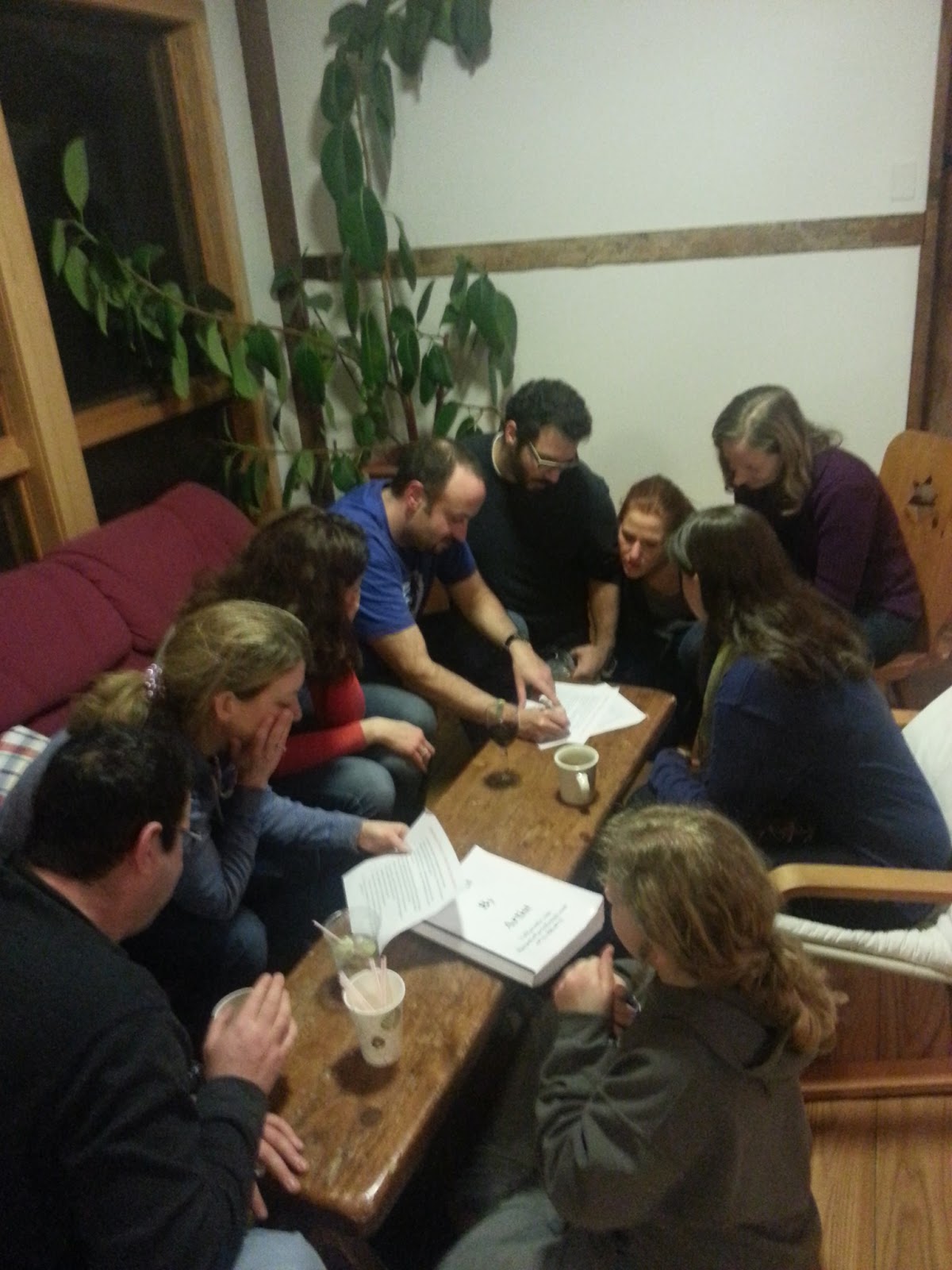
If you are receiving this email, it means that you have been invited to participate in an email discussion of privacy issues.  This started as a discussion on my Facebook page, and I thought this might be a fun/interesting discussion to have.  I will endeavor as moderator to be as interesting as I can and to make you look even smarter and more engaging than you already are.  No easy task.  Since you are already so smart and engaging.

Of course you are all busy and have lives.  (Or so we say).  And I respect that.  (I do.) And I respect your privacy.  So, if you don't want to play, no problem.  But if you want to participate, please reply and let me know.

Here - for reference - is the original Facebook thread, which has the beginnings of some interesting discussions and some of the flava:


August 8, 2013

Um. Yeah.

Onward and upward.  And sometimes sideways.

But mostly upward.

August 3, 2013

The More Things Change


I read a short but fascinating article in the New York Times earlier this year called "You Won't Stay The Same."  The article discussed a study of the the so-called "end of history illusion" in which people tend to systematically under-estimate how much they will change in the future: "People seemed to be much better at recalling their former selves than at imagining how much they would change in the future."

The reasons for this phenomena are unknown.  But the article offered a few plausible possibilities:

(1) Because we over-estimate our own awesomeness.  We want to believe that we are fully evolved to be the person we are right now, a finished product, so to speak;

(2) Predicting the future - how we will change - is...well...really hard.  In other words, its a failure of imagination.  Its just easier and more comfortable/normal/natural to imagine ourselves as staying the same.

At any rate, the article really resonated with me.  We are constantly changing.  We, in fact, change so much that we - who know ourselves best of all, or at least longest of all - underestimate the extent of our very own transformation.

You know, the whole "No man steps in the same river twice, for its not the same river and he's not the same man" "there is nothing permanent but change" thing.  Change is the only constant.  The more things stay the same, the more things change.  Etcetera.  Etcetera.  Etcetera.

The constancy of change is a theme that I've been reading a lot about lately.

In Buddhism, this is referred to as the principle of "impermanence":

"What makes us suffer is wanting things to be permanent when they are not.  We need to learn to appreciate the value of impermanence . . . Impermanence teaches us to respect and value every moment and all precious things around us and inside us."

                        - The Heart of Buddha's Teaching, Thich Nhat Hanh

I particularly like the way that Sakyong Mipham put it in his book, Turning the Mind Into An Ally:

"The fact is that what appears to us as a solid reality is actually in a state of continuous flux.  The world is a continuous state of flux.  The house that we grew up in is not the same house anymore.  The mother and father that we knew when we were children are physically different now.  Where is our first bicycle?  At one time it seemed to real.  Everything is always coming together and falling apart . . . .  Coming together and falling apart is the movement of time, the movement of life.  This is as obvious as our own face, and yet we imagine our self as solid and unchanging . . . . We feel that everything is just as it appears.  Yet if we look beneath the surface, we find that our universe is not quite as stable as it seems."

Everything is impermanent, both ourselves as well as the world around us.


This drives home the counter-intuitive point that every day, when you wake up in the morning, you are a different person.  How much do I believe this, or should I believe this?  I'm not sure.  I still believe that there are core things about me and you - constants - that make me intrinsically "me" and you intrinsically "you."  And a lot of times I wake up in the morning, and I don't feel all that different.

But surely, we do have great capacity to change.  Not only do we change and impact our world by interacting with it, but our world, by interacting with us, changes us.  In ways that are sometimes difficult to detect and measure.

On the change wrought by adversity ("the storm"), for example, one of my favorite authors, Haruki Murakami writes:

"[O]nce the storm is over you won't remember how you made it through, how you managed to survive.  You won't even be sure, in fact, whether the storm is really over.  But one thing is certain.  When you come out of the storm, you won't be the same person who walked in."

Through adversity, through experiences, through new things we see or read or do or think or say, through the people we meet and the things we share, we certainly are changing.  More than we know.  And that's a wonderfully dynamic thought.

One More Graduation Speech - Erring Towards Kindness

A few months back in what - I am embarrassed to say! - was my last blog post, I wrote about a few of my favorite graduation speeches and harvested some of the thought-provoking wisdom being dispensed to college graduates.

Short declaratory sentences of wisdom.  Like "Wear Sunscreen."  Like "This Is Water."

Today's New York Times featured a graduation speech recently given by George Saunders at Syracuse University this year.  It could be titled, Tending Towards Kindness.  Like the other two, this is going in my great speech pantheon.  Welcome to the party George!

His speech contains a wonderfully put kernel of universal truth.  And great wisdom.  Which is why I wanted to share the full speech here.  

Some snippets are below:

"What I regret most in my life are failures of kindness.

Those moments when another human being was there, in front of me, suffering, and I responded...sensibly.  Reservedly.  Mildly.

Or, to look at it from the other end of the telescope:  Who, in your life, do you remember most fondly, with the most undeniable feelings of warmth?

Those who were kindest to you, I bet.

Its a little facile, maybe, and certainly hard to implement, but I'd say, as a goal in life, you could do worse than: Try to be be kinder.

*   *   *
Why aren’t we kinder?
Here’s what I think:
Each of us is born with a series of built-in confusions that are probably somehow Darwinian.  These are: (1) we’re central to the universe (that is, our personal story is the main and most interesting story, the only story, really); (2) we’re separate from the universe (there’s US and then, out there, all that other junk – dogs and swing-sets, and the State of Nebraska and low-hanging clouds and, you know, other people), and (3) we’re permanent (death is real, o.k., sure – for you, but not for me).
Now, we don’t really believe these things – intellectually we know better – but we believe them viscerally, and live by them, and they cause us to prioritize our own needs over the needs of others, even though what we really want, in our hearts, is to be less selfish, more aware of what’s actually happening in the present moment, more open, and more loving.
*   *   *
Since, according to me, your life is going to be a gradual process of becoming kinder and more loving: Hurry up.  Speed it along.  Start right now.  There’s a confusion in each of us, a sickness, really:selfishness.  But there’s also a cure.  So be a good and proactive and even somewhat desperate patient on your own behalf – seek out the most efficacious anti-selfishness medicines, energetically, for the rest of your life."

April 17, 2013

Wearing Sunscreen In This Water - From the Mundane to the Profound

While we're on the topic,  I also really like a good hard-hitting "how to live life" kind of speech.  Commencement addresses, when done right, can sometimes be a good source for this sort of inspiration and perspective.  (Even though the only thing I remember about my own college graduation was how blazing hot it was.  But I digress.)

At any rate, I've happened across two such speeches that I like very much over the past few days.

The first, well,  wasn't actually a commencement address.  But, as urban legend would have it, it was a commencement speech delivered by one Kurt Vonnegut.  Not true, as it turns out.  The "Wear Sunscreen Speech" was a 1997 column from the Chicago Tribune written by one Mary Schmich.  I remember reading it years ago.  Worth re-reading.  Not fall-off-your-chair awesome, but nicely done.

What I particularly love about it is the way it juxtaposes the mundane ("floss") with the profound ("Sometimes you're ahead, sometimes you're behind.  The race is long and, in the end, it's only with yourself.").  Because that is what life is, a cross between the mundane and the profound.

Oh, and here's a couple neat things that Kurt Vonnegut actually did say:

  • "Hello, babies. Welcome to Earth. It's hot in the summer and cold in the winter. It's round and wet and crowded. At the outside, babies, you've got about a hundred years here. There's only one rule that I know of, babies—God damn it, you've got to be kind." 
  • "I urge you to please notice when you are happy, and exclaim or murmur or think at some point, 'If this isn't nice, I don't know what is.'"
Yup.  He's good, that Kurt Vonnegut.  Kilgore Trout would be proud.

The second, entitled "This is Water," is a 2005 commencement address delivered by the incomparable David Foster Wallace.  I had never come across this before.  Love it.  This piece should simply be required reading.

Interestingly, it also touches on the connection between the mundane and profound.  Perhaps we're on to something here?!

Some snippets to entice you:

"There are these two young fish swimming along and they happen to meet an older fish swimming the other way, who nods at them and says "Morning, boys. How's the water?" And the two young fish swim on for a bit, and then eventually one of them looks over at the other and goes "What the hell is water?" . . . .  

If you're worried that I plan to present myself here as the wise, older fish explaining what water is to you younger fish, please don't be. I am not the wise old fish. The point of the fish story is merely that the most obvious, important realities are often the ones that are hardest to see and talk about. Stated as an English sentence, of course, this is just a banal platitude, but the fact is that in the day to day trenches of adult existence, banal platitudes can have a life or death importance, or so I wish to suggest to you on this dry and lovely morning. . . .

The point here is that I think this is one part of what teaching me how to think is really supposed to mean. To be just a little less arrogant. To have just a little critical awareness about myself and my certainties. Because a huge percentage of the stuff that I tend to be automatically certain of is, it turns out, totally wrong and deluded. I have learned this the hard way, as I predict you graduates will, too. . . .

[L]earning how to think really means learning how to exercise some control over how and what you think. It means being conscious and aware enough to choose what you pay attention to and to choose how you construct meaning from experience. Because if you cannot exercise this kind of choice in adult life, you will be totally hosed.

The really important kind of freedom involves attention and awareness and discipline, and being able truly to care about other people and to sacrifice for them over and over in myriad petty, unsexy ways every day.

It is about the real value of a real education, which has almost nothing to do with knowledge, and everything to do with simple awareness; awareness of what is so real and essential, so hidden in plain sight all around us, all the time, that we have to keep reminding ourselves over and over:

'This is water.'

'This is water.'"

April 12, 2013

Quotes Quotidien


Tidy aphorisms.  Humor.  Concise thoughts on love, on life and how to live it.  By authors, scientists, poets, musicians, learned Jedi, luminaries of one kind or another, family members, and friends.

Over the past few years, I have become an obsessive collector of quotes.  And lately even more so.

I've always loved quotes - underlining and bracketing as I read, jotting them down here and there.  But lately, the urge to catalog, to bring them all together in an ordered list (AKA "The List"), has grown.  I'm not sure why.

Perhaps because, these little phrases, the things that stick in your head and in your gut and speak to you, they say something about who you are, or who you yearn to be.  Or maybe I just like the words, strung together so nicely.

Of course, there are other opinions on the matter.  Some feel that quotations are trifles, mimicry, unoriginal, repeating the thinking of others.  (As Dorothy Sayers liked to say, "I always have a quotation for everything; it saves original thinking.").  To that, I say - screw you Dorothy Sayers, crotchety 19th century British crime-writer.  I didn't even know who you were until I looked up "quotes on quotations" and found that quote of yours.  No no.  That's not it at all.  Nothing against Ms. Sayers.  

No matter.  I'm just with Ralph Waldo Emerson on this one: "By necessity, by proclivity, and by delight, we all quote."

For me, there is something undeniably satisfying about a well thought-out, well-composed wisp of truth.  And that's what a great quote is.  A perfectly formed simple little nugget, the boiled-down essence of something universal.  The New York Times recently ran an article, We Are What We Quote, describing "the steading compactness and solidity of the ideal quote - the one that stands there bare and isolated and unencumbered, tiny enough to be grasped all at once, yet unfathomably wide an deep." Yup.  That's it.

So now I keep The List of Quotes, some of which I reproduce below.  The members of my hall of quotes are diverse.  They include my Mom (who gave me the advice I try to follow every day of my life to "Be.  See.  Do."), my son Jacob (exasperatingly and quite seriously explaining the American culture of sports to my daughter, "That's the *point* of Sunday, Lauren!  To watch football!"), and fictional characters like Yoda ("Try not.  Do or do not.  There is no try."), Optimus Prime ("Fate rarely calls upon us at a moment of our choosing."), and Gandalf the Grey ("Some believe that it is only GREAT POWER that can hold great evil in check.  But that is not what I have found.  I have found that it is small every day deeds of ordinary folk that keep the darkness at bay.  Small acts of kindness and love.").  And then, of course, there are other check-out-the-big-brain-on-Brad types like Einstein, Twain, David Foster Wallace, and Murakami.

If I try to break them up along thematic lines, it seems I favor quotes on adventure ("throw off the bowlines"!), living life fully, and just plain going for it.  But without taking ourselves too seriously:
  • “To live will be an awfully big adventure.” ― J.M. Barrie, Peter Pan
  • “Twenty years from now you will be more disappointed by the things that you didn't do than by the ones you did do. So throw off the bowlines. Sail away from the safe harbor. Catch the trade winds in your sails. Explore. Dream. Discover.” - Mark Twain
  • "When I was 5 years old, my mother always told me that happiness was the key to life. When I went to school, they asked me what I wanted to be when I grew up. I wrote down ‘happy’. They told me I didn’t understand the assignment, and I told them they didn’t understand life." - John Lennon
  • “Live, travel, adventure, bless, and don't be sorry.” ― Jack Kerouac
  • “It is better to be small, colorful, sexy, careless, and peaceful...” ― Tom Robbins, Jitterbug Perfume

  • "Life is about not knowing, having to change, taking the moment and making the best of it without knowing what's going to happen next. Delicious ambiguity." - Gilda Radner
  • “The most sophisticated people I know - inside they are all children. ” ― Jim Henson

  • “Our lives are not as limited as we think they are; the world is a wonderfully weird place; consensual reality is significantly flawed; no institution can be trusted, but love does work; all things are possible; and we all could be happy and fulfilled if we only had the guts to be truly free and the wisdom to shrink our egos and quit taking ourselves so damn seriously.” ― Tom Robbins
 
I'm also, it seems, a fan of various and sundry motivational "life advice":
  • "Action is the foundational key to all success.” ― Pablo Picasso
  • "When everything seems to be going against you, remember that the airplane takes off against the wind, not with it." ― Henry Ford
  • “Don't feel sorry for yourself. Only assholes do that.” ―  Haruki Murakami
  • “The very least you can do in your life is figure out what you hope for. And the most you can do is live inside that hope. Not admire it from a distance but live right in it, under its roof.” ― Barbara Kingsolver
  • "Learn from yesterday, live for today, hope for tomorrow. The important thing is not to stop questioning. " ―  Einstein
  • "Every day is a new opportunity. You can build on yesterday's success or put its failures behind and start over again. That's the way life is, with a new game every day, and that's the way baseball is." - Bob Feller

  • "Greatness is a lot of small things done well. Stacked on top of each other." ―  Ray Lewis.
  • “How far you go in life depends on you being tender with the young, compassionate with the aged, sympathetic with the striving and tolerant of the weak and the strong. Because someday in life you will have been all of these.” ― George Washington Carver
  • “‘Learning how to think’ really means learning how to exercise some control over how and what you think.  It means being conscious and aware enough to choose what you pay attention to and to choose how you construct meaning from experience.  Because if you cannot or will not exercise this kind of choice in adult life, you will be totally hosed.” ― David Foster Wallace, This is Water

And then there is the funny stuff by comedians and non-comedians alike.  (And this doesn't even include Chris Rock, Robin Williams, or anything from the Daily Show!)  Where would we be without humor?!  As Thomas Mann wrote: "Laughter is the sunbeam of the soul.":
  • "Narrator: Inside Kyle's mouth, the muscles contract to force a smile, even though in his brain, Kyle is thinking, "dude, f**k you." - South Park  
  • "Nothing interferes with my concentration.  You could put an orgy in my office and I wouldn't look up.  Well, maybe once." - Isaac Asimov
  • "If a woman has to choose between catching a fly ball and saving an infant’s life, she will choose to save the infant’s life without even considering if there are men on base." - Dave Barry
  • "We are here on earth to do good for others. What the others are here for I do not know" -W.H. Auden
And finally, I'm a huge sucker for quotes on the overarching impossible-to-understand forces that we all try to understand anyway:
  • “Power, time, gravity, love. The forces that really kick ass are all invisible.” ― David Mitchell
  • "Love is not consolation. It is light." ―  Nietzsche
  • "A person learns how to love himself through the simple acts of loving and being loved by someone else.” ― Haruki Murakami, 1Q84
  • "We are transformed not by being loved, but by loving." ―  St. Paul
  • “Longing on a large scale makes history.”― Don DeLillo
  • “Maybe the only thing I can definitely say about it is this: That’s life. Maybe the only thing we can do is accept it, without really knowing what’s going on.” ― Haruki Murakami, What I Talk About When I Talk About Running
  • "The good, the beautiful, the true are to be found in everyone, but very few people know that. People think that the true, the beautiful, and the good exist somewhere else, in someone else. They don't know that they are true, beautiful, and good at their core. Our whole life, we are looking for someone else to replace what we feel is missing" ― Thich Nhat Hanh, The Art of Power
  • “What we see before us is just one tiny part of the world. We get in the habit of thinking, this is the world, but that's not true at all. The real world is a much darker and deeper place than this, and much of it is occupied by jellyfish and things.” ― Haruki Murakami, The Wind-Up Bird Chronicle
  • “There is no perfection only life” ― Milan Kundera, The Unbearable Lightness Of Being

March 7, 2013

Vermont....Tradition (And not the Fiddler on the Roof Kind...Or Is It?)

In the beginning, and I’m not sure when exactly that was, there was a President’s Day Weekend trip to the Hill Farm Inn in Arlington, Vermont.  Each year, my aunt and uncle and their friends would head up to Vermont for the weekend, and occupy most, if not all, of the rooms in the inn.  This was a special group of people, not only colorful interesting characters but also, on average, brilliant.  Most were also gamers; the kind of people who did the Sunday London Times Crossword puzzle.  And finished it.  Many had met playing bridge, or at Harvard.

Oh.  And also, there were no kids. 

During the days, people may go out cross-country skiing or snowshoeing, lounge about by the fireplace playing games, and a handful may have gone downhill skiing at Bromley.  One of the popular daytime activities was to take a group walk from Arlington into Manchester, walking sticks in hand, along the country back-road, slowly, talking, enjoying the air.  There was a School of Falconry.  There was a terrific roadside sign that read “Slow.  Dog crossing.  Geese crossing.  And One Old Man.”  And Manchester, both then and now, has the distinction of being home to the most fabulous bookstore in the entire world, NorthShire Bookstore.  (It’s only gotten better with time.)

On Saturday night, everyone participated in the epic “Pub Quiz” trivia contest, which put together each year by my uncle.  It was extremely difficult and competitive, covering literature, history, science, geography, math, pop culture, music, film, and many other categories. 

There was also music: piano and guitar, sometimes a fiddle, and one year a dulcimer.  There was raucous singing.  Tom Lehrer songs, like The Elements and Poisoning Pigeons in the Park were all the rage.  As was Arlo Guthrie’s Alice’s Restaurant.  In later years there were beautifully haunting waltz trios on the piano, fiddle, and flute.

By dint of family and perhaps our supposed maturity, myself and my brother and sister became the first “kids” to be allowed on the trip.  My first trip had to be around 1989 or 1990; I was in high school and remember working on a term paper on Brown vs. the Board of Education.  I also remember learning about single malt scotch, the thrill of playing poker for the first time, and the group sing-alongs.  We were allowed to participate in the pub quiz, and eventually I became my uncle’s apprentice, helping him to put the quiz together.

I also have distinct memories of my first times cross-country skiing.  Trying to make up in youth what I lacked in ability to actually cross-country ski, I was continually falling behind the group.  Each time, they would wait for me, all resting up.  As soon as I arrived (exhausted), they would say “OK!” and push off again.  No rest for the weary.  Though to be fair, at my favorite place, Wild Wings, there was an excellent “warming hut” where you could recharge with home-made brownies.  Afterwards, we would go out for glog or gimlets in Manchester.  We were welcomed into the mix.  I loved it.
The group had specific requirements for inns.  Our inn had to be big enough to accommodate the group, it had to have great common spaces for the pub quiz, it had to serve not only breakfast but also dinner, and it had to have inn-keepers who were hearty and patient enough to deal with our group.  Over the many years, for one reason or another, we have moved from The Hill Farm Inn in Arlington to the nearby Green River Inn, to the Silas GriffithInn in Danby, to one ill-fated year at the Salt Ash Inn near Okemo, to the Vermont Inn, and now to the Mountain Meadows Lodge, near Killington and Pico.

With the exception of the year we got married and the years we lived in Japan, I have been going on this weekend trip to Vermont every year for almost twenty-five years.

The trip has transitioned over time.  We still fill all the rooms in the inn.  But none of the original group still comes.  Now, the Vermont weekend is made up of our generation, mostly friends from college and town.  One significant difference is that there are now many many many (did I say many?) kids.  Almost as many small people as big people.  There is still gaming, and lounging by the fireplace.  Most of the group now skis downhill, though many also go tubing, sledding, snowshoeing, or cross-country skiing.  There is also still music.  And this year a karaoke machine was added to the mix. The jury is still out on that one.  (Actually, I have to say that, but who are we kidding?  It was awesome.)


My uncle used to serve as both “Tripmeister” (AKA organizer of the trip) and “Quizmeister” (AKA organizer and administrator of the Saturday night Pub Quiz).  Now Ilena has taken over as “Tripmeistress,” while I have taken over as “Quizmeister.”  Lauren is my apprentice.


This year, I memorialized “The PQ Rules” for the first time, as follows:

  1. Four teams.  Team with most points: wins.
  2. Have fun.
  3. But winning is the most important.  (Duh).
  4. No “devices” please.
  5. Obey the time-limits and pencils down requests, the first time.  (Or we’ll never get through it to play cards, drink, or sleep.)
  6. None of my answers is “wrong.”  (Also, two wrongs don’t make a right.)  There are no “challenges.”  I will serve as judge, jury, and - if necessary - executioner.
  7. Ties will be broken this year with a physical challenge.
Below is a picture of this year's winners, the aptly named #Winners (AKA The Hashtag Winners, which Jacob referred to all night as The Hashbrown Winners.).  They beat out The Hedgerow Bustlers by a point, narrowly avoiding the need for a physical challenge tie-breaker. 

So.  I’ve been doing this trip for a long long time now.  When it comes time to welcome everyone back for another year at dinner on Friday Night, I get sentimental.  And I probably give the same speech every year.  It’s about friendship and togetherness.  It’s about taking the time to get away.  It’s about our tradition.  About it’s about building a tradition for our children that includes the same types of experiences and fond memories that inspired me to write this in the first place. 

That’s what its all about.

March 3, 2013

The Backyard Rollercoaster Project


Inspired by Gever Tulley’s Life Lessons Through Tinkering TED Talk, some recent trips with our kids to Coney Island to ride The Cyclone, and the epic episode of the iconic cartoon, Phineas and Ferb, where they build a roller coaster in their backyard, we have convened a group of local mostly Maplewood and South Orange dads and tinkerers with a bent towards, well, “interesting projects.”


We plan to work together and with our kids (and with others in the neighborhood who would like to join us) to plan and build a backyard roller coaster in Spring/Summer of 2013.

Seriously.

We think that this project will be good for the kids (and parents!) in the hands-on get-outside and learn-by doing that we can actually MAKE stuff way that none of us – grown-ups or kids – seem to be getting enough of these days.  We do not have grand aspirations and want to go where the kids will take us.

Should be interesting.

For more about this project, click here.  For our current thoughts on schedule and how we will go about this, click here.

**This production is brought to you by Dads Living Vicariously.

February 13, 2013

Actualization, actually.


“ ‘There is truth, my boy.  But the doctrine you desire, absolute, perfect dogma that alone provides wisdom, does not exist.  Nor should you long for a perfect doctrine, my friend.  Rather, you should long for the perfection of yourself.  The deity is within you, not in the ideas and books.  Truth is lived, not taught.’ ”  

- The Glass Bead Game (Herman Hesse)

"After seven years of work, leave.  And go among strangers.  So that those that know you don't prevent you from becoming...the next version of yourself." 

- Anonymous (Paraphrased Proverb).

I learned a new word the other day:  "self-actualization."  Thought I would share.

According to Wikepedia, self-actualization refers to "the motive to reach one's full potential" (to become one's potentialities; to live creatively and fully and to express and activate to the fullest of his capacities):

"In his studies, Maslow found that self-actualizers share similarities. Whether famous or unknown, educated or not, rich or poor, self-actualizers tend to fit the following profile.
•   Efficient perceptions of reality. Self-actualizers are able to judge situations correctly and honestly. They are very sensitive to the fake and dishonest, and are free to see reality 'as it is'.
•   Comfortable acceptance of self, others, nature. Self-actualizers accept their own human nature with all its flaws. The shortcomings of others and the contradictions of the human condition are accepted with humor and tolerance.
•   Spontaneity. Maslow's subjects extended their creativity into everyday activities. Actualizers tend to be unusually alive, engaged, and spontaneous.
•   Task centering. Most of Maslow's subjects had a mission to fulfill in life or some task or problem ‘beyond’ themselves (instead of outside of themselves’) to pursue. Humanitarians such as Albert Schweitzer and Mother Teresa are considered to have possessed this quality.
•   Autonomy. Self-actualizers are free from reliance on external authorities or other people. They tend to be resourceful and independent.
•   Continued freshness of appreciation. The self-actualizer seems to constantly renew appreciation of life's basic goods. A sunset or a flower will be experienced as intensely time after time as it was at first. There is an "innocence of vision", like that of an artist or child.
•   Fellowship with humanity. Maslow's subjects felt a deep identification with others and the human situation in general.
•   Profound interpersonal relationships. The interpersonal relationships of self-actualizers are marked by deep loving bonds.
•   Comfort with solitude. Despite their satisfying relationships with others, self-actualizing persons value solitude and are comfortable being alone.
•   Non-hostile sense of humor. This refers to the wonderful capacity to laugh at oneself. It also describes the kind of humor a man like Abraham Lincoln had. Lincoln probably never made a joke that hurt anybody. His wry comments were gentle proddings of human shortcomings.
•   Peak experiences. All of Maslow's subjects reported the frequent occurrence of peak experiences (temporary moments of self-actualization). These occasions were marked by feelings of ecstasy, harmony, and deep meaning. Self-actualizers reported feeling at one with the universe, stronger and calmer than ever before, filled with light, beautiful and good, and so forth.

In summary, self-actualizers feel finally themselves, safe, not anxious, accepted, loved, loving, and alive, certainly living a fulfilling life."

Pretty good stuff, eh?  Its really about constantly evolving.  Something to shoot for.  And some days - maybe - I feel like I'm on my way.  Others, not so much.  Its true.  But such is life.